Everything a Tourist & Student Should Know Before Coming to Budapest, Hungary
Welcome to Atlantis, dear travelers!
A year ago, I arrived in Budapest to study. Honestly, I had no idea what to do, how to use public transportation, or even where to start exploring. The only Hungarian word I knew was how to say “thank you.” And I know many of you might feel the same when planning your first trip here.
So, to celebrate my first year in Budapest, I decided to put together this guide — everything I wish I knew before coming here. Whether you’re a tourist, exchange student, or moving here long-term, this post covers all the basics: transport, money, culture, food, must-see places, and more.

🚇 Transportation in Budapest
Getting around Budapest is easy once you know how the system works. All you need is internet access (Google Maps works really well here!) and a little bit of local knowledge.
✈️ From the Airport
100E Airport Bus → The direct airport shuttle that takes you right to the city center (Deák Ferenc tér). Costs a little more, but it’s the easiest for tourists.
200E Bus → A cheaper option if you have a daily/weekly pass. It takes you to the M3 metro line (Kőbánya-Kispest), then you continue into the city.
Taxi → I recommend using Bolt (cheaper and safer than random street taxis).
MiniBUD Shuttle → A shared shuttle van from the airport to hotels — convenient if you have luggage.
💡 Tip: If you don’t validate your ticket or pass, the fine is around 25,000 HUF (~65 EUR). Controllers are strict!
🚋 Inside the City
Metro: 4 lines, easy to navigate, signs are in English too.
Trams: Especially the 4–6 tram (runs 24/7) and the yellow 47/49 tram are iconic.
Buses: Some express ones like 133E are very useful.
BudapestGO App: Buy, store, and validate tickets on your phone.
💡 Always validate your ticket in the orange machines on trams/buses or before entering the metro.
🎓 For Students Who Will Study in Hungary
After you get your student ID, the first thing you should do is buy a student monthly pass. These passes are much cheaper compared to regular ones, and they’ll save you a lot of money if you use public transport every day.
You have two options:
Pest County Pass → valid in Budapest and the surrounding Pest region.
Hungary Pass → valid almost everywhere in Hungary, so it’s better if you plan to travel around the country often.
💡 Don’t forget to carry your student ID with you at all times — controllers will ask for it. And remember to renew the semester sticker on your card; otherwise, your pass won’t be valid and you might get fined.
🚴 Cycling & Lime Scooters in Budapest
Budapest is also great to explore on two wheels. The city has bike lanes almost everywhere, and you can rent bikes easily.
- MOL Bubi → the city’s official bike-sharing system. Cheap and convenient, you just unlock a bike with the app and drop it off at another station.
- Lime Scooters → if you prefer something quicker, Lime e-scooters are available around the city. Just unlock with the app and ride — perfect for short distances.
💡 Tip: Both options are cheaper than taxis, but make sure to stick to bike lanes when possible.
🌙 Night Transportation
The 4–6 tram runs all night.
There are special night buses — Google Maps shows them accurately.
Or just use Bolt if you want an easier option at night.

🚆 To Other Cities in Hungary
Trains (MÁV): Hungary’s national railway company is called MÁV. Trains are usually the easiest way to take day trips — for example to Esztergom, Vác, Eger, Debrecen and more.
👉 You can check timetables, ticket prices, and even book online on the official site MÁV
or by using their app “MÁV” (works in English too).
Buses (Volán / FlixBus): Sometimes buses are faster or cheaper than trains, especially for short trips. FlixBus is popular for longer routes as well.
💡 Tip: If you’re a student, always carry your student card — you can often get discounts on MÁV trains and buses. And most of the trains to different city if you have Hungary Pass is free.
🌍 To Neighboring Countries
Budapest is in the heart of Europe — perfect for weekend trips.
Vienna: 2.5 hours by train (ÖBB or MÁV), or FlixBus.
Bratislava: 2 hours by train or bus.
Prague: 6–7 hours by bus (RegioJet, FlixBus).
💰 Currency & Money in Hungary
Currency: Hungarian Forint (HUF).
Exchange rate: 1 EUR ≈ 390–400 HUF (check daily).
ATMs: Use OTP or Erste. Avoid Euronet ATMs — they charge high fees.
Always choose local currency (HUF) when withdrawing or paying with card.

🏰 Must-See Places in Budapest
I already wrote a full blog post about the best landmarks, viewpoints, and photo spots — you can check it out here.
🎡 Fun & Interesting Things to Do
From thermal baths to ruin pubs, from light museums to cave diving — Budapest has endless activities. I’ve collected my favorites in another post: Read the full list here
🇭🇺 Hungarian Cuisine
Hungary is a country with a very unique mix of history, culture, and food. You’ll notice it everywhere — in the hearty dishes, the traditional drinks, the famous cafés, and even in the small snacks you can pick up at the supermarket. If you’re visiting Budapest (or moving here as a student like me), here are some things you should definitely try.
Hungarian food is rich, filling, and full of paprika (you’ll see paprika everywhere!). These are some of the must-try dishes:
Gulyás (Goulash) → A warming soup made with beef, potatoes, vegetables, and plenty of paprika. Traditionally cooked in a cauldron over fire, it’s the perfect comfort food.
Lángos → Deep-fried flatbread topped with sour cream, grated cheese, or garlic butter. It’s the ultimate Hungarian street food, usually sold at fairs, markets, and food stalls.
(My favorite one→ Grab one fresh and hot from the vendor near Budapest Eye (opposite Akvárium Klub) — it’s cheap, simple, and sooo good.)
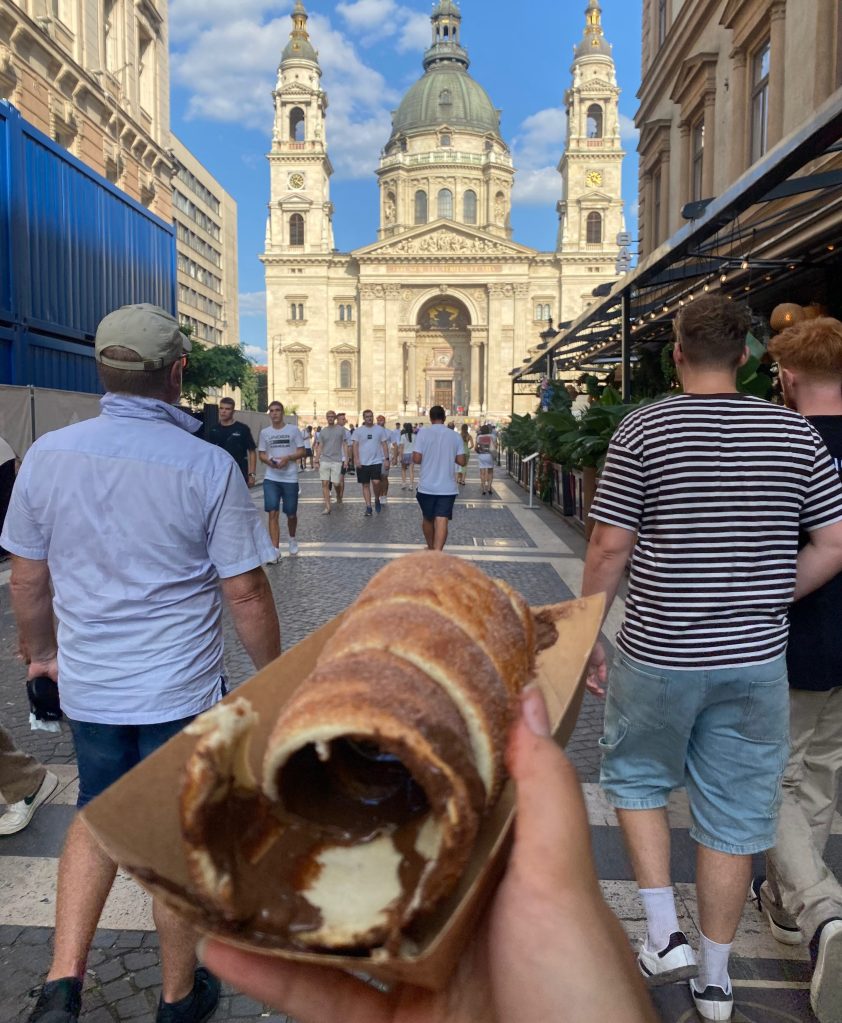
Kürtőskalács (Chimney Cake) → Sweet dough wrapped around a spit, baked over open fire, and coated with caramelized sugar. You can get it rolled in cinnamon, cocoa, coconut, or nuts. Best enjoyed warm, ideally at Christmas markets.
Dobos Torte → A layered sponge cake with chocolate buttercream and a crunchy caramel glaze on top. A true Hungarian classic.
🍷 Hungarian Drinks (Contains Alcohol)
Hungary has a long winemaking tradition and some very unique spirits:
Tokaji Aszú → A world-famous sweet dessert wine. Often called the “wine of kings.”
Egri Bikavér (Bull’s Blood) → A strong red wine blend from the Eger region.
Pálinka → A powerful fruit brandy, usually made from apricots, plums, or cherries. Hungarians say “Pálinka is medicine” — but it’s very strong, so sip carefully!
Unicum → A dark, bitter herbal liqueur made from 40+ herbs, dating back to the 18th century. Locals either love it or hate it, but trying at least one shot is a Budapest experience in itself.

☕ Cafés, Bars & Restaurants in Budapest
Budapest’s food scene is as much about atmosphere as it is about taste. These are some iconic (and some personal favorite) places:
New York Café → Called “the most beautiful café in the world.” With gold ceilings, chandeliers, and marble details, it feels like a royal ballroom. It’s expensive and touristy, but worth visiting at least once for the experience.
Szimpla Kert → The most famous ruin pub. Colorful, messy, and artistic, it’s more than just a bar — it’s an atmosphere. Perfect for nightlife and meeting new people.
Central Grand Café & Bar → A traditional café dating back to the 19th century. Ideal for a slow breakfast or afternoon coffee.
Twentysix Budapest → A green oasis in the city center. With its greenhouse design and Mediterranean food, it’s great for brunch or a relaxing dinner.
Kiosk Budapest → A stylish, modern restaurant by the Danube with a mix of Hungarian and international dishes. Vibrant and perfect for dinner with friends or a date night.
🛍️ Markets & Food Halls
Central Market Hall (Nagyvásárcsarnok) → Budapest’s most famous market. Downstairs, you’ll find fresh vegetables, paprika, sausages, cheese, lángos, and more. Upstairs, there are souvenirs and small eateries. A great place to combine shopping with tasting local flavors.
🍫 Hungarian Snacks
Hungary also has its own snack culture. Some you’ll see in every supermarket:
Túró Rudi (Pöttyös) → A chilled chocolate bar with sweet cottage cheese filling. You should eat cold.
Balaton → A classic Hungarian wafer bar.
Negro → Herbal candies.
Tibi Chocolate → Hungary’s own chocolate brand, available in many flavors.
⚡ Hell Energy Drink
Hungary’s most popular energy drink — cheap, strong, and found everywhere.
- Food &Groceries Delivery: You can use Wolt or Foodora to order food, groceries, coffee and more.
🏨 Which Districts Are Good for Staying in Budapest?
Budapest is divided into districts (like neighborhoods), and where you stay can really shape your experience.
District V (Belváros / City Center): Close to everything — Parliament, Basilica, Danube. Great for first-time visitors, but also the most expensive.
District VI & VII (Terézváros & Erzsébetváros): Vibrant areas full of cafés, bars, and ruin pubs. Perfect if you want nightlife and easy access to transport. District VII is also the Jewish Quarter, full of history and character.
District I (Buda Castle Area): Quieter, with cobblestone streets and stunning views. Good if you prefer a peaceful atmosphere.
District VIII (Palace District): Trendy but less touristy. Close to universities, cafés, and student life.
District XIII (Újlipótváros): Residential and cozy, with cafés and the Danube nearby. Great for longer stays or if you want a local vibe.
💡 Tip: If it’s your first time in Budapest, stay in Pest (closer to the main attractions). If you want quiet and views, Buda is your spot.
🔒 Is Budapest Safe?
Yes — Budapest is considered one of the safest capitals in Europe. You can walk around most areas day and night without problems. But like any big city, keep a few things in mind:
Watch for pickpockets in crowded areas (trams 4/6, metro, Christmas markets).
Avoid taking random street taxis — always use Bolt or official taxi companies.
In nightlife districts, keep an eye on your drink (as you would anywhere).
Police and controllers are present and strict about tickets — always validate your transport pass.
Overall, as a student living here, I can say it’s safe and comfortable, even late at night.
🗣️ Learn a Few Hungarian Words
Hungarian might look intimidating at first, but locals appreciate it if you try a few words. Even just the basics can make your experience more fun:
- Köszönöm → thank you
- Szia → hi/bye
- Egészségedre → cheers
- Jó napot→ have a good day
🌤️ Which Season to Visit Budapest?
Budapest changes a lot with the seasons, and each one has its own charm:
Winter (December–February): Christmas markets, thermal baths in the snow, and skating at Városliget. It’s cold, but the festive vibe makes up for it.
Spring (March–May): The city wakes up with flowers, outdoor cafés, and warmer walks along the Danube. Great for sightseeing without huge crowds.
Summer (June–August): Ruin pubs, rooftop bars, outdoor festivals like Sziget, and the big fireworks on 20th August (St. Stephen’s Day). Hot but lively!
Autumn (September–November): Wine festivals, colorful leaves in the Buda Hills, and cozy evenings in cafés. Perfect balance of weather and events.
🛡️ Travel & Health Insurance for Students
One thing many people forget before coming to Hungary (or anywhere abroad) is travel and health insurance. As a student living here, I really recommend having one — it saves you money and stress if something unexpected happens.
I personally use SafetyWing. It’s affordable, flexible, and especially good for students or long-term travelers. You can buy it online in minutes, and it covers both travel and health needs while you’re abroad.
If you are looking for long term insurances to use while you are living in Hungary as a student you can choose Groupama Insurance.
✨ Closing Note
Budapest has been my home for a year now, and I’m still discovering something new every week. I hope this guide helps you feel a little more prepared — and a lot more excited — for your own trip here. Whether you’re coming for a weekend or moving for studies, this city has a way of surprising you in the best possible ways.
To read my other blogs click here.

📌 Disclosure: Some links in this post may be affiliate links. If you click and make a purchase, I may earn a small commission at no extra cost to you. I only share places and experiences I personally trust and love.

 Site
Site 
Leave a comment